Thursday, May 17, 2012

Facebook: If It's Not Broke


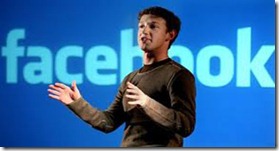
Some clever big wigs behind social network phenomenon Facebook have decided the current smooth running of the site is simply not enough. No doubt keeping the Facebook site builders busy and in employment, CEO Mark Zuckerburg has announced the roll out of the dreaded timeline, which is currently optional but due to become mandatory for all users.


The timeline in short is a hazy inaccurate scrap book of your life - well at least your life since you joined the website. Making it easily accessible to view every wall comment, status, or picture tag & upload simply by hitting the year in which you (or your friends) want to visit.


Facebook is a fantastic tool which helps you to stay in touch with people that without it you probably would have long forgotten. Its a great way to speak to distant family members, old school pals and those friends who've moved away, making it difficult to visit them on a regular basis.

After finding out someone I didn't want to know the ins & outs of my daily life could access my profile via a mutual friend, I made a conscious decision around a year ago to only update my status with silly jokes, general social commentary or inane chatter about my dog, TV or the weekend which I would be indifferent about strangers knowing.


My profile has always been set to private and I only have people on my friends list whom I actually know & have met at one time in my life or another. My true friends who I actually still make the effort to see, I can probably count on two hands. These are the friends whom I have no qualms about sharing all aspects of my life with. Whilst of course I like all the people on my friends list, most are just acquaintances, some I've not seen for years. Despite what someone's profile leads you to believe - no one actually has 500+ friends.


So what do I expect to see on my timeline? I travelled. I went to a party. I was unhappy. I was drunk. I got angry. I was bored. I had a Chinese takeaway. I hated someone. I watched a TV series. I went shopping twice in one weekend. All statements I would never dream of immortalising if I was making a psychical scrapbook - so why does Facebook feel it necessary to allow me & my friends to revisit these times? Why on earth would I (or my fiance) want to see photo's or wall posts from ex partners, read an irate status that is long forgotten or be reminded of old friends who we no longer associate with?

As I'm getting older (& possibly more boring) I'm finding Twitter much more suited to my needs. The conundrum of posting your entire life in words and pictures on Facebook is becoming increasingly alien to me, despite the fact I had a very different view just a few years ago.


A survey independent from Facebook conducted in 2010 suggested that old partners, ex friends & enemies or those who only know of you through degrees of separation are more likely to access your public profile on a regular basis than your actual friends.

Thanks to Facebook I know the ins and outs of the lives of babies and toddlers whom I've not actually ever met. You are bombarded with only the positive rose tinted tidbits implying a perfectly warped impression of parenting without the mundane or frustrating aspects.


Other users openly declare their Doctors latest diagnosis on returning from the GP. Katy's had cystitis twice in 3 months & Michelle's benefit payments are paid fortnightly Tuesday


Some crudely imply they've 'just had a good ol' session' forgetting Catholic great aunt Mary is on their friends list. One will openly update all 500 of their online friends of their tragic struggle battling mental illness & another is blase about discussing their pending day as the accused in court.


Some even speak with those whom previously they never had many dealings, thanks to the equivocal weak link that both parties happen to have children. (Like millions of other women in the country). This entails liking and commenting on each others sprog-related status updates. Every. single. one. of. them.


"Did you breastfeed & have a natural birth?" ...Well I tried to breastfeed once & had a C section, but OMG! lets now forge a friendship based on this tenuous link!

I will cringe at what I wrote just 2-3 years ago no doubt, along with the many(!) photos I took from the age of 15 onwards but at least I am responsible for putting them there.


As the generation of Facebooked children become adults. Developing little personalities of their own and inevitably become computer literate internet savvy grown ups. I'm not sure they are going to appreciate that Mum & Dad's Facebook timeline - which is no doubt permanently archived on the web forever - is public viewing for them ...or their teasing school friends.


It's bad enough I cringe when my Mum gets my baby album out purely for the amusement of my fiance, let alone having 2,749 of them for the whole world to see at a click of a mouse.

Facebook is persistently redesigned when it doesn't need to be. It worked perfectly fine as it was with the previous basic but functional layouts, without the live post ticker, scarily accurate photo recognition tagging technology and without the facility to chat in real time.


As the timeline roll out looms it does make you question; if it was never broke in the first place - why are Zuckerburg & co constantly trying to fix it?


Source                                                        Facebook / Twitter

Labels: , , ,

Saturday, April 28, 2012

Facebook Might Allow Underage Children

Facebook founder, Mark Zuckerberg is willing to change the age restrictions to become a member of Facebook. This will allow the children younger than 13 years to join and use the website. In a report published by International Business Times, Mark Zuckerberg acknowledged that the Children’s Online Privacy Protection Act regulates what information websites can gather on children under age 13 and wants to change this.


According to a survey by Consumer Reports, almost 7.5 million kids under the age of 13 use different social networking sites. What’s surprising is that 5 million of the children are under the age of 10.
One of the major issues with the children using Facebook is time management. Children will find it difficult to manage the time while using Facebook. Also social networking for children is too early to begin if Facebook were to allow underage children, but it will definitely save them grace by telling truth about their age.


Labels: , , ,

Monday, September 19, 2011

facebook new security changes

Summary: Facebook’s privacy and security settings have changed massively. It’s time to catch up and ensure your settings are up to date.


Every single Facebook user should now have the brand new privacy settings, which have changed radically since the last update.


With brand new features and revamped settings to play with — this three-day holiday weekend is a perfect opportunity for you to take a look at your Facebook account, profile and privacy settings, and lock them down.


However, because of Facebook’s expected profile, account and privacy shift earlier this month, an awful lot has changed — as you will no doubt have noticed.


The previous Lockdown Guides have been some of the most popular content on ZDNet to date.


Each gallery guide will walk you through a crucial focus area of Facebook’s settings, and will run through every single setting, option and feature available to users, to ensure that your privacy is as protected as it can be.
Gallery guide 1: Secure your friends lists


New guide: This guide is a crucial focus to the remaining guides, showing you how to create lists of friends, such as colleagues and family, as well as a ‘limited profile’, allowing you to limit updates and uploaded content from those you do not want to share with.


Gallery guide 2: Secure your profile page
Updated: Believe it or not, your profile settings page is now where your privacy settings are. This guide will walk you through the updated user-interface, as well as the recommended settings for each section of your profile.

Gallery guide 3: Secure your account settings
Updated: Your account settings are at the heart of your Facebook, and have changed significantly. This guide reflects those major changes, and shows you how to be secure using the world’s largest social network. It also helps you manage your data, including a full section on how to manage the applications and games that are connected to your account.

Gallery guide 4: Secure your privacy settings
Updated: Everything has changed! Included in this guide are the new privacy features that Facebook rolled out earlier this month, including changes to how you are tagged, and who can share your data. You can also manage your block lists from here, and make sweeping permissions changes to your old posts.

Gallery guide 5: Secure the miscellaneous bits
Updated: This guide will show you how to download all of your data, as well as showing you how to manage your BlackBerry and iPhone settings. Also, seeing as your status update window has changed, it will show you how to set locations and tag friends in a safe way, and how to create private events that are limited to your network.

Labels: , , ,

Monday, June 20, 2011

Social Network Sites


I am going to focus on social network sites as a case study, because they are still the most massive and relevant case study we can work with. (This might be changing soon with mobile but we're not there yet.)

First, you'll notice that I'm saying "social network site" instead of "social networking site." This is intention. While you might be off using Facebook and MySpace to network with business colleagues, high school mates, and the hotty that you think you might want to date, most teens are not. They're focused on their friends. They use these sites to connect to people that they already know from school, church, activities, summer camp, etc.

One of the most problematic mistakes adults make when trying to make sense of social network sites is to presume that kids interact on these sites just like they do. This ain't true. Teens are using this space as a social hangout with their pre-existing network.

There are four features of social network sites that are relevant for us here today:

1. Profiles. Social network site profiles are where youth write themselves into being. Think of the profile as a digital body. Up until this point, you are an IP address and an IP address can't be dolled up for show and tell. With a profile, a teen can express who they are. Keep in mind the audience. This is about showing off to known individuals. Thus, when teens saying that they're 95 and from Christmas Island, they know they're not and their friends know they're not. They don't care about data accuracy for the system - they care that their friends get a sense of who they are. Profile decoration is akin to decorating one's bedroom wall or locker (back before that was a fire hazard). It's all about self-expression for friends.

2. Friends. Social network site Friends are not the same as your closest and dearest. There are all sorts of reasons to list others as Friends, not the least of which is because it's socially rude not to. Don't assume that when people indicate that they are connected on this system that they like each other. One way of thinking about Friends is as intended audience. This is who teens think that they are hanging out with. Of course, this is also Ground Zero for psychodrama - there's nothing fun about having to answer the question "Are you my Friend, Yes or No?" from someone you know but don't care for.

3. Comments. Most adults look at the comments on teens' profiles or Wall and get all uppity. Sure, the conversation typically boils down to "Yo, wazzup?" "Not much.. you?" "Nothing... I'm bored." "Me too." But be honest with yourself - those conversations that you just had in the hallway about the weather... were they so much more meaningful? I don't think so. All of this is a process of social grooming. It's a way of acknowledging one another and connecting while also letting everyone in the room know that you're not a pariah. I mean, imagine if we all went into the hallway and stood by ourselves and didn't make small chat. Wouldn't we all feel really awkward? Right. So think of these Comments in that regard. Teens know how to have deeper conversations - this just isn't where those necessarily happen.


4. New Feed. When Facebook launched the News Feed (and MySpace copied it), microblogging emerged on social network sites. These "status updates" provide a reverse chronological stream of the state of being of one's network. Many of these are mundane notes, details about food, comments on life, the universe and everything.

Most of you are familiar with this kind of structure through Twitter. Many of you have already send a bazillion Tweets today - we've all been watching them. But before you go thinking that you're down with the kids, let's get one thing straight: according to Pew, the median age of the Twitterverse is 31. That's right: this ain't kids' world.

Take a moment.. Do not assume that youth will adopt every new form of social media. In fact, they won't. There are very good reasons for why they don't use Twitter, not the least of which has to do with the fact that their parents think it's cool. Of course, Ashton Kutcher might change this. But for the most part, teens aren't here and aren't humored with being this public.

So why are they here? What are they doing here? The first thing to understand is that there's social pressure to be where your friends are. This ain't new. It's about the mall, about the school dance, etc. You don't exist if you're not where your friends are.

Of course, just because teens want to gather with their friends doesn't mean that social network sites are the ideal place. Often, being offline together with friends is much more preferred.
danah: If you could choose between hanging out with friends or being online with them?

But they still have good reasons for getting together online with friends, not the least of which is because they aren't allowed out. Teens often turn to them because they don't have other spaces in which they can gather with peers.

Of course, at the end of the day, social network sites are a great hang-out place, a great place to coordinate, and a great place to share. In fact, there's a lot about the way in which youth interact here that signals that it's just like any other public space. Now here's where we need to think about structure. How are these environments similar or different to other public spaces?

Labels: , ,

Learning about Social Networks


First, I want to make it VERY clear that sociality has learning implications. Youth engage with others to work out boundaries, to understand norms. This is how they learn power and authority, how they learn the networked architecture of everyday life. It's easy to eschew this, to argue that this is irrelevant, but most people spend a decent amount of their time working through social issues as a part of being an adult in this society. We talk about it as "politics" usually but it's about people. And teen years are where this is worked out.

It's also important to note the ways in which we need to learn to learn. Social media is connecting educators and learners in new ways and this too is extremely important. Consider, for example, this quote where a teacher helps a student in the off-hours on her MySpace:
"Pleeeeeeeeeeease tell me why pre-calculus is important to me..."
Mr. C: "... You're not learning this stuff because you need it every day as an adult... The reason is that studying these things (precalculus, Shakespeare, ... whatever) helps you get good at learning how to learn. And that, you will definitely have to do for the rest of your life. That's practically all we do as adults..."

Of course, that doesn't address where and when technology is useful in the classroom. We all know that technology can be useful in education purposes. Many of you are deeply invested in bringing technology to the classroom. I'm speaking to the choir on this one.

But I want to make one thing clear... Just because youth are using social media doesn't mean that it can fit well into the classroom. It needs to be thought through pedagogically and y'all need to understand how it's being used in everyday life before bringing it into the classroom.


Since we're using social network sites as a case study, let me point out one of the places where they FAIL miserably. On social network sites, you have to publicly list your Friends and you have to have the functioning network to leverage it. What happens if you're an outcast at school? Does bringing it into the classroom make it worse? What happens if you're forced to Friend someone who torments you because you share a class? And then you have to face that person in your "private" space online as well? Bringing social network sites into the classroom can be very very tricky because you have to contend with social factors that you, as a teacher, may not be aware of.

While I'm hesitant to introduce many forms of social media into the classroom directly, I think that it is critical to see how they are reshaping information flow. This is actually where tremendous innovation opportunities emerge.

We all know that youth are searching for information in totally new ways so I'm going to skip over that. But they are also sharing differently. Sharing of information is very different in a world of bits where it's easy to make a duplicate and still retain what you originally had. Pointers have value and sharing information can create memes. Needless to say, youth are leveraging social media to share with their friends and peers. Now, most of what they share might be pure gossip, but teens also share links, references, ideas, and original content.

Of course, while adults are increasingly using sophisticated tools to aggregate and disseminate information, youth are predominantly not. Teens are not familiar with RSS feed readers or aggregators like Del.icio.us. Again, just because you use these forms of social media doesn't mean youth do. For the most part, teens are primarily sharing through IM and their SNS of choice. Or simply by word of mouth.

In the same vain, most teens live and breathe open systems like Wikipedia but have no idea how these systems work. They are typically told that Wikipedia is bad rather than being taught how to make sense of the information that is there.

Many of them are producing their own content without a critical understanding of remix or user-generated content. They're experiencing the blurring between consumption and production but they don't have a framework to make sense of this or to understand how to respond to attacks on their practices.


For all of the attention paid to "digital natives" it's important to realize that most teens are engaging with social media without any deep understanding of the underlying dynamics or structure. Just because they understand how to use the technology doesn't mean that they understand the information ecology that surrounds it. Most teens don't have the scaffolding for thinking about their information practices.

It's critical to realize that just because young folks pick up a technology before you do doesn't inherently mean that they understand it better than you do. Or that they have a way of putting it into context. What they're doing is not inherently more sophisticated – it's simply different. They're coming of age in a culture where these structures are just a given. They take them for granted. And they repurpose them to meet their needs. But they don't necessarily think about them.

Educators have a critical role when it comes to helping youth navigate social media. You can help them understand how to make sense of what they're seeing. We can call this "media literacy" or "digital literacy" or simply learning to live in a modern society. Youth need to know more than just how to use the tools - they need to understand the structures around them.


You need to understand what they're doing and why. Most importantly, you need to not reject what they're doing or fetishize it.


The modern world is certainly filled with neat new gadgets. Today's youth are certainly embracing many of them. Yet, at the end of the day, what they are doing is a lot like what previous generations were doing, inflected by the dynamics and features of the technology. So how do we face the next generation living and learning with social media?

We start by opening up a dialogue. We start talking to youth about what they are doing and why they are doing it. We ask them to teach us about the technology while we guide them with the knowledge that we have through experience. We start co-operating and engaging with the shifting nature of everyday life.

At the end of the day, the biggest disruption brought on by technology has nothing to do with the youth themselves, but with the way in which it forces us to reconsider our position of power as adults. We cannot simply tell it like it is; we need to re-learn how to learn and how to evolve with the changes all around us.

Labels: , ,

Tuesday, April 5, 2011

Tips to Avoid Facebook Viruses and Spam Messages


Facebook, the biggest social network with 500 million users, provides an interface to hit an unsuspecting crowd with malware and viruses. These viruses aren’t very difficult to detect if you are cautious enough. These Facebook viruses appear on your wall in forms of a bizarre or eye-catching stories and videos and once the user has clicked/liked the link, it is already late. The next step will be getting rid of your Facebook virus which is a time-consuming process. Its better to avoid spam messages and trojan viruses in the first place.


How to avoid it?
1. Think before you Act. Viruses on Facebook are sneaky. The hackers and cybercriminals who want your information know that Facebook users will often click on an interesting post without a moment’s thought. If a post sounds a bit over-the-top like a headline out of a tabloid, this is your first warning sign.

2. Try to avoid Links and videos with Catchy words like “funniest ever,” “most hilarious video on Facebook,” or “you’ve got to see this.” Do some keyword research to see if the post in question comes up in a search engine with information about a current virus or trojan.

3. Check the poster of the Suspicious content. If you receive a message from someone you do not know, this is an obvious red flag. Facebook video viruses also tend to pop up in your news feed or on your wall from friends you haven’t talked to in a while. Unfortunately, it’s likely this friend has already fallen victim to the latest virus on Facebook. After clicking on the story themselves, the message was sent out to all of their friends as well.

4. Avoid messages that have been posted by multiple users as the virus spreads among your friends who were not so cautious. If a link with title such as “Sexiest video ever” shows up all over your feed from all kinds of people (perhaps friends you would not expect to make such a post), this is another warning sign. Similar direct messages are a likely variant of the notorious Facebook Koobface virus which has used this approach in the past.

5. Do not fall for the “typical” money-transfer schemes. Chat messages from friends needing funds will usually sound suspicious. Everything can’t be screened before posting, so money transfer scams and hoax applications still find their way on to Facebook. You should also avoid applications that claim to do a full “Error check” or fix security problems related to your profile.

6. Update your anti-virus software frequently. If you do accidentally click on a post before realizing it is a hoax, do not click on any further links or downloads. If it’s too late and you have already been infected, the Facebook virus removal process may be effortless if you have a good anti-virus program to catch the virus, trojan or other malware early on.

What’s Next?
These were few important tips to safeguard your facebook account but your job isn’t done yet. Once you have detected that the link/post on your facebook wall is Malicious you should Mark it as SPAM so that the facebook support will stop it from spreading further and infecting other users.
If you have ever fallen victim of any such Malicious Scheme, please share your experience with all the users in form of comments so that others don’t fall victim of it.

Labels: , , ,

Saturday, April 2, 2011

HOW TO: Add a Dislike Option to Your Status Update


“Like” buttons are everywhere on Facebook, and they’re everywhere on the web. But what if you want to update your status or share something that your friends can “dislike?” We know, your friends can choose to “comment” on your post, but where’s the fun in that?
The clever Status Magic Facebook app can add a dislike button to any status updates posted via the app. And if you wanted to really mix it up you can actually customize the second emotion to anything, such as “love,” “hate,” “disagree” or even “LOLs.”

2. HOW TO: Hide Status Updates From Certain People


Using Facebook’s general privacy settings (find these by hitting “account” on the top right of a Facebook page) you can select whether everyone, just friends or friends of friends can see your status updates. However, there is a way to narrow those options down even further.
You can select specific friend lists to see your status (relevant for work, special interest groups, etc.) or even individual people by name, which is useful for anyone organizing a surprise party.
To take advantage of these options, click the padlock icon just below your “what’s on your mind” box on your wall and a drop down menu should appear. Selecting “customize” will bring up more options such as “make this visible to” and “hide from” with the option to make your selection a default.

Labels: , , ,

Monday, January 31, 2011

Employers Have to Check New Employees' Social Networking Profiles?


Every employer tries to hire the best employee in terms of educational qualification and professional experience. Its the responsibility of HR department to seek and recruit the best employee for their job opening.
In Pakistan hiring an employee is an easy task. A reviewing of the candidates papers, an interview and consulting a few references and you are done. Following the philosophy of first impression is the last impression. Every employee tries to present their self  in the best possible manners. Regardless how that person is in its normal life. Everyone would hire a sober looking and a well dressed person speaking fluent English with a charismatic personality. But afterwards when the employee gets hired. He tends to show his true spirit. Behaving in a way which is unacceptable and wasn’t seen during the interview.
The thing is judging the behavior and true personality of a possible employee with just an interview and a few references is not enough. If we take an example, In US HR firms do a thorough check on the social networking profiles of the employee prior to the interview. They check the domestic life and background of their yet to be employees to see what are their habits and living style. If you have put a picture of yours with your friends during a game of beer pong and you happen to be in US then you will would never get the job no matter how many A’s you got in your academic life.
This practice enables employers to hire the best staff which positively impacts the future of their companies. So, companies and HR firms in Pakistan should also consider to check social networking profiles of job seekers to make sure they are recruiting the best people. With more than 900,000 people on Facebook from Pakistan and the ongoing awareness of blogging – every job seeker is likely to have an online social profile. With which his social lifestyle and habits can be monitored.
According to a study from US job website, CareerBuilder:
Forty-five percent of employers are using social networking sites to research job candidates prior to interviewing them. Of those who conduct online searches/background checks of job candidates, 29 percent use Facebook, 26 percent use LinkedIn and 21 percent use MySpace. One-in-ten (11 percent) search blogs while 7 percent follow candidates on Twitter. Thirty-five percent of employers reported they have found content on social networking sites that caused them not to hire the candidate. Fourteen percent of employers also disregarded a candidate because thy sent a message using an emoticon such as a smiley face while 16 percent dismissed a candidate for using text language such as GR8 (great) in an e-mail or job application. Eighteen percent of employers reported they have found content on social networking sites that caused them to hire the candidate.
This shows that how beneficial  social media can be for both the employer and the employee. I think its time that employers should start this practice and pick the right people. At least IT and Telecom industries must screen their employees prior hiring them. This can also help job seekers to build up a strong social profile highlighting their academic and professional achievements and maintaining a good relationship with their peers. Social media networks like LinkedIn can actually get job seekers the best job they can think about. Social media is a powerful tool – What both employers and employees need to do is use it in the best way.

Labels: , ,

Monday, January 10, 2011

Facebook Closing Down on March 15th?


poa9C 76F thumb Facebook Shutting Down on March 15th?This rumor is spreading all across the web that facebook would shut down its operations on March 15, 2011.
This news initiated from Twitter and later on got published on various blogs and news websites. The source mentioned everywhere is a press conference conducted by March Mark Zuckerberg outside his Palo Alto office.
Zuckerberg was quoted as “Facebook has gotten out of control, and the stress of managing this company has ruined my life. I need to put an end to all the madness.”
Zuckerberg went on to explain that starting March 15th, users will no longer be able to access their Facebook accounts.
Not only this, there are comments of Vice President of Technical Affairs at Facebook “Mr. Avrat Humarthi” as well saying After March 15th the whole website shuts down, So if you ever want to see your pictures again, I recommend you take them off the internet. You won’t be able to get them back once Facebook goes out of business”.
The news quite obviously seems a rumor, since Mark himself is fond of posting such astounding things on his Facebook page, as last time we saw the Time Magazine update on his page.
“I don’t care about the money,” said Zuckerberg. “I just want my old life back.”
The way different sources have posted his “I Don’t Care attitude” about the billions of money he is earning from Facebook does not give a very realistic picture. The truth on the other hand is that it is not at all easy to wind up such immensely growing business. The website with over 500 million active users no doubt looks difficult to manage, but instead of shutting it down every sane would definitely think of selling it out to get max benefit possible.
Anyhow, The Facebook Corporation suggests that users remove all of their personal information from the website before March 15th. After that date, all photos, notes, links, and videos will be permanently erased.
More on Google News

Labels: , , ,

Tuesday, October 5, 2010

Social technologies succeed when they fit into the social lives and practices of those who engage with the technology.


Friendster launched at a time when the economy was slow and many web-minded 20-somethings were slacking at menial jobs that they didn't care about (particularly in the SF region where people were only coming out of post-bust depression); many web-minded folks were happy to spend hours futzing online. Economic factors have changed and many web-minded have found interesting jobs. This is only a small cause of Friendster's loss of this group, but one that should be acknowledged.
Friendster was a new thing, full of interesting content that motivated people to surf and surf and surf. Surfing motivated people to post more interesting things. Games emerged. Games were squashed by the company. Surfing got super duper slow. Friendster became less novel and more restrictive and, thus, more lame.
MySpace launched at a time when some of the game-minded were still enthusiastic and the enthusiastic surfers wanted to find more kitsch crap. They jumped on MySpace, created all sorts of culture and profiles complete with massive amounts of media, and helped figure out how to hack the system to make the profiles more expressive. MySpace didn't stop them. As a result, the cultural enthusiasm was nurtured and it grew and grew and grew...
MySpace realized that people were promoting events on Friendster. They contacted promoters and got them to engage with the "cool" people on the site by promoting LA-based events. From this, there was the emergence of band profiles, giving musicians an opportunity to create identity and have a place to point fans to. Music is cultural currency. 20-somethings want to know how to get on the list. Young people follow music and celebrities. Other young people follow the young people that follow music. Music played a critical role in increasing its popularity, simply by giving it cultural currency amongst celebrities and by marking MySpace as "cool." (Even teens who don't care about music recognize that music differentiates people and is part of the "cool" narrative.)
Both Friendster and MySpace saw a drop in ages. Friendster squelched this fast because they saw themselves as a dating site. MySpace supported it with different features and a drop in age limit as they realized there was more to sites like this than dating.
Youth and alienated populations are inclined to spend more time going through identity development processes because they are trying to "figure out who they are." Blogs and profiles are particularly supportive of this. Of course, blogs require having something to say while profiles let you write yourself into being via collage. People do grow out of ongoing identity production, but not for quite some time. (Hell, i still haven't.) Friendster tried to stop this, wanting people to be serious and fit into pre-defined checkboxes - to know who they are. MySpace let these groups run wild and these are the two populations who dominate MySpace - youth (14-24) and 20/30-somethings who participate actively in cultural development (from performance artists to clubgoers to sex divas to wannabee celebrities). These sites are ideal for these populations, even if they make no sense to parents and professionals.
For many teens, MySpace is the first asynchronous messaging system that they use regularly. Sure, they have emails but those are to communicate with parents/teachers/companies, not with friends. People check in daily to see what messages they get. This was starting to happen on Friendster, but server slowness killed this practice. This will make it quite tricky for teens to fully leave MySpace while their friends are still using it.
Identity development requires taking ownership of your presentation of self and really being able to personalize it, morph it to be "you" (even if you is copied from a site that tells you how to be you). Templates are not personalization.MySpace allowed users to really make the site their own, asking one favor: don't overwrite the advertising. Out of respect, most users complied. Think about that: Out. Of. Respect.
Basically, MySpace evolved with its users, building a trusting relationship, figuring out how to meet their needs and cultural desires, providing them with features and really trying to give them what they were looking for. Friendster did not - it fought its users hand and foot, telling them how to behave.

When Friendster launched, it was quickly inhabited by populations who had good reasons to connect with each other. By and large, the early adopters were living in a region different from their hometown (or living in their hometown post-college and cranky about it). Finding "lost" friends was a fun game - people wanted to connect. Of course, connecting is not enough and it was bound not to last, but it was fun.
Connecting is also the initial activity of newcomers on MySpace, but they move beyond that quickly. Of course, it never completely goes away, especially since MySpace acknowledges that not all "friends" are friends and no one bats an eye if someone collects hundreds of people. It's more like a process of namaste - i acknowledge your soul and you acknowledge mine. MySpace did not try to force people's connecting practices into pre-existing ideas of whatshould be. They let the practice evolve as users saw fit, without criticism, without restriction. As it evolved, people did new things with it. They used it to flirt, to advertise bands and activities, to offer cultural kudos.
Friendster's early adopters were 20-somethings. While many did not come to Friendster to get laid (just as they say they don't go to bars to get laid), places where large numbers of hott singles hang out are bound to attract other singles, regardless of whether or not they want to admit that they're looking for sex. Friendster was a free site where people could meet other interesting people; at the same time, rejection was OK because no one was actually _looking_ to meet someone. Sex is still the reason why people use the site, particularly gay men. This was a big gain for Friendster and, also a gain for MySpace. Given its singular focus, Friendster was much more successful at supporting this than MySpace, making certain that search worked and was meaningful and that relationships meant something. Of course, that also curtailed its growth tremendously.


People use the social technologies that all of their friends are using.

Freaks, geeks and queers all invaded Friendster in the early days and they made certain that all of their friends were there. They did so organically in clusters. This was very successful, until they felt alienated from the site. There is a tipping point to get on and a tipping point to get off. Once mass departure began with a few pissed-off folks, it spiraled quickly. While the early adopters left storm-like, canceling their accounts, most users simply stopped logging in frequently because it was no longer the place where their friends were.
Friendster was beginning to get mainstream American 20/30-somethings when it got bogged down by dreadfully slow servers. Mainstreams would (and did) irritate the early adopters, but not enough to make them leave. Yet, both mainstream-ification and slowness played a role in the departure of early adopters. Mainstream-ification played a greater factor in early adopters' lack of interest in returning once the site was fixed.
The slow servers made it very difficult (if not impossible) for mainstream users to engage. Frustrated, many lost interest before they really engaged. It should be noted that slow connections are more common in foreign countries and so this did not serve as the same kind of barrier elsewhere - growth continued during the slow period in Singapore, Malaysia, Philippines and Indonesia. Because of this (and a few other factors), Friendster survived the server disaster in these regions and continued to grow into the mainstream there. And into the youth.
Mainstream American users came on because of mass media, not because of organic cluster effects. When they joined, they couldn't see anything or anyone. It was also not where all of their friends were and often they got bored before their friends arrived; there was never enough of a tipping point for many mainstream clusters.
MySpace stayed out of the media for the first two years. Their growth was completely organic, allowing for significant cluster effects. Additionally, those who heard about it but didn't have many friends there could join and still participate, still see what people were doing. They got a friend - Tom - and could wander around looking at all of the profiles. For cluster influencers, this was critical, and looking around would often motivate them to drag in their friends.
When clusters of friends are all on a social site, watercooler effects emerge. The limited amount of things people could share made this difficult on Friendster; people mostly shared profiles as cultural currency and testimonials did allow for some marking of turf and social hierarchy. Yet, on MySpace, there are a bazillion things to find deep in the nooks, allowing lots and lots to be shared. Allowing media in comments and the ability to share video/pictures via profiles enhanced this.
Testimonials on Friendster took the form of singular acknowledgments of others' existence. Fakesters started turning it into a communication space, but that practice died with the Fakesters; very few users took that on. The comments section on MySpace took the form of a performative guestbook. Whenever someone thinks of someone else, whenever they stop by, they leave a comment... They let both the owner and the owners' visitors take note of their presence. They're writing presence into being in addition to writing themselves into being. This is a very important turn and it really solidifies people's engagement in the site.


It's not all about productivity.

People often say that social networking sites will succeed when people have something to do. They point to sites like LinkedIn where business people can social network and actually get "value" out of the site. There is no doubt that LinkedIn is great for brownnosers, but there are a lot of folks out there who don't care about "getting ahead" by hegemonic standards.
Suggesting that formalized action and tangible benefits are the only path to success is hogwash. These are simply ideals that contemporary America holds onto in a capitalist society where people are only valued based on their productivity. It is reproduced by technologists who are living in a society full of venture capitalists and stockbrokers and other people who live by the "do or die" mentality. But the reality is that most people's social lives are not so formal, not so action-oriented. Or, at least not in the sense that technologists speak of.
Even when there's no prescribed activity, people are doing things on these sites. They're hanging out. They're dancing in front of digital mirrors. They're patting their friends on their digital backs. They're increasing the strength of their relationships through sharing. They're consuming and producing cultural artifacts that position them within society. They're laughing, exploring and being entertained.
People were hanging out on Friendster before they hung out on MySpace. But hanging out on Friendster is like hanging out in a super clean police state where you can't chew gum let alone goof around and you're told exactly how to speak to others. Hanging out on MySpace is more like hanging out in a graffiti park with fellow goofballs while your favorite band is playing. That said, there are plenty of folks who don't want to be hanging out in a graffiti park and they are not sticking around on MySpace as a result.


It is not about technological perfection.

Portability of identity doesn't matter. Easy-to-use interfaces don't matter. Visual coherence doesn't matter. Simple navigation doesn't matter. Bugs don't matter. Fancy new technologies don't matter. Simple personalization doesn't matter.
Before you scream "but it does to me!" let me acknowledge that you're right. It does matter to you. The question is whether it matters to the masses. And it doesn't. Especially for teens.
What's at stake here is what is called "subcultural capital" by academics. It is the kind of capital that anyone can get, if you are cool enough to know that it exists and cool enough to participate. It is a counterpart to "cultural capital" which is more like hegemonic capital. That was probably a bit too obscure. Let me give an example. Opera attendance is a form of cultural capital - you are seen as having money and class and even if you think that elongated singing in foreign languages is boring, you attend because that's what cultured people do. You need the expensive clothes, the language, the body postures, the social connects and the manners to belong. Limitations are economic and social. Rave attendance is the opposite. Anyone can get in, in theory... There are certainly hodgepodged clothes, street language and dance moves, but most folks can blend in with just a little effort. Yet, the major limitation is knowing that the rave exists. "Being in the know" is more powerful than money. You can't buy your way into knowledge of a rave.
"Coolness" is about structural barriers, about the lack of universal accessibility or parsability. Structural hurdles mean people put in more effort to participate. It's kinda like the adventure of tracking down the right parking lot to get the bus to go to the rave. The effort matters. Sure, it weeds some people out, but it makes those who participate feel all the more validated. Finding the easter egg, the cool little feature that no one knows about is exciting. Learning all of the nooks and crannies in a complex system is exhilarating. Figuring out how to hack things, having the "inside knowledge" is fabu.
Often, people don't need simplicity - they want to feel proud of themselves for figuring something out; they want to feel the joy of exploration. This is the difference between tasks that people are required to do and social life. Social life isn't about the easy way to do something - it's about making meaning out of practice, about finding your own way.
Bugs make technologies seem alive, particularly if they're acknowledged and fixed. They give texture to the environment and people are impressively patient with it if they feel like the architects are on it. It makes the architects look vulnerable which brings them back down to earth, making them real and fallible, but giving them the opportunity to do good. They let the benevolent dictator really serve the people.
Friendster focused on simple and narrow, giving users very limited options and cracking down on all hacks. For a long time, they took away features rather than adding them. They worked to mainstream-ify, to be equally generic to all users. MySpace added features all the time, making it a game to see what had changed, to find new ways of navigating the site. Hacking the site became a cultural phenomenon with websites being dedicated to hacking techniques (brought to you by fellow cultural participants not O'Reilly). MySpace let users define the culture.


Social technologies need benevolent dictators who love their constituents.

Online communities are more like nation-states than technological tools. There is a master behind the architecture, a master who controls the walls of the system and can wage war on her/his people at any point. People know this. They have to trust that the creators have their best intentions in mind. They invest a lot of time and energy into creating an identity in the system - they want to believe that it is worth it.
Killing off profiles destroys the trust that users have in the leader. Doing so will alienate users and their friends. There are good reasons to alienate some groups - spammers, malicious users, etc. But if you start off treating all of your users as potential criminals, you will not build a healthy environment. Kinda like in real life...
Friendster killed off anyone who didn't conform to their standards, most notably Fakesters and those with more creative non-photorealistic profiles. When MySpace users didn't conform, they were supported and recognized for their contributions to evolving the system. (Exceptions made for pornography, spammers, people using hate speech.) When Friendster was faltering because it was "uncool," Friendster users did not stick up for the site. When MySpace began to falter over the predator crisis, many users got outraged at those attacking the system. They wrote supportive notes to Tom, made YouTube videos, wrote messages on their MySpaces. They didn't want outsiders telling them they couldn't have their space.
People need a figurehead to both love and hate. No figurehead can expect that the users will love her/him all of the time. But lashing out at users makes things much much worse. Figure heads need to operate as rockstars - making public appearances, putting on a good show, keep a happy face even when pissed off.
Jonathan Abrams made it clear that he thought very little of his users. Tom Anderson comes across as loving his users, listening to them, being present with them. Abrams wrote nasty-grams and the language he used when writing to everyone was either obnoxious or so corporate-y formulaic that users could not relate to him. Tom apologizes candidly, writes funny messages to users, welcomes comments on his page, responds to users. Users either love Tom or they think he's lame. But very few actually hate him. Friendster users loathed Abrams.
It should be noted that one of the reasons that Friendster continued to grow abroad is that Abrams did not seem like as big of a dick there. He was much more savvy in addressing the press (or they were nicer to him). He killed off fewer profiles and let it grow amongst youth (probably due to being overwhelmed rather than insight). He had a more hands-off approach. He's less hated there and thus, by default, more trusted.

Moral panic


If the moral panic over MySpace succeeds and causes a change in law (which it is looking like it will), everyone invested in social technologies will lose. In other words, stop celebrating the crisis and get off your asses and engage. This panic is not just a funny side note. It is an industry wide problem concerning speech, property and responsibility. I find it deeply disturbing that we are suggesting that technology companies should be operating in loco parentis.
MySpace is in trouble because of its size and rapid growth. As a result of this, there are so many conflicting practices that people are panicking. Even if your kid has a perfectly PG profile, the idea that s/he can hang with R-rated ones is flipping people out, even when the R-rated ones are perfectly normal in the context in which their created. Collapsed contexts due to size. All of you who want to grow in size better be paying attention, because there are severe complications when you grow. MySpace is facing them right now.
We have faced seen massive communities with collapsed contexts before, but the additional factor of youth has elevated this issue to new levels. And, besides, we've never actually seen such rapid growth in a social technology, nor have we seen such a large coherent social community. Note: Usenet, MOOs and YahooGroups don't count because they were far more segmented structurally, especially pre-search. When they emerged, a much larger proportion of the online population used them, and these technologies did not threaten cultural norms (mostly because hegemonic society wasn't online and didn't recognize the power of digital interaction). Other social technologies did not attract an entire generation while alienating their practices from the previous generation. Finally, while people did expose themselves in other technologies, explicit profile creation of this multi-media form takes it all to a new level.
Back to the fad question... No, it is not just a moral panic that could make MySpace a fad. The primary value right now has to do with identity production and sharing, practices that are more critical to certain populations at certain times in their lives and it is possible that "growing up" will be marked by leaving MySpace (both for the teens and the 20-somethings). It is also possible that getting on MySpace will be marked as "uncool" by the next generation (in the same way that fashion changes across generations). Feeling spammed and invaded by advertisers (or musicians) who seek friendship might turn off users and an increase in this could cripple usage. It is possible that the site will stop evolving with its users. It is possible that people will find new, more interesting ways to do identity production and sharing. It is also possible that the next blinky shiny object will attract users away in clumps, particularly if they better support users' desires in an innovative way. But none of these are right around the corner.
When Friendster users left, they didn't go to the next thing. Yes, many Burners went to Tribe.net and created a really flourishing community there; this community is still alive and doing really well. And some of the gothy humans went to MySpace. But the vast majority of Friendster users simply went back to email and IM, web surfing and the occasional blogging. Friendster didn't meet their needs and the core practices of identity production and social sharing that MySpace offered were not significant enough for this group. A huge part of the success of MySpace is an age and culture thing. Part of being an American teen is figuring out who you are, how you fit into society and culture, how social relations work, etc. Part of this process involves sharing cultural objects, hanging out and trying out different self-performances to find the one that feels "right" (think Goffman "faces"). There are plenty of adults who are doing this as well, but it is central to youth culture. Youth will always do this, using whatever medium is available to them. MySpace is far more deeply situated in the cultural values and practices of its constituents than Friendster ever was. MySpace teens may jump ship, but they are not going to stop doing identity work, at least not for a few years.


Labels: , ,

Thursday, September 30, 2010

Real social network would you please stand up?


All too frequently, someone makes a comment about how a large number of Facebook Friends must mean a high degree of social capital. Or how we can determine who is closest to who by measuring their email messages. Or that the Dunbar number can explain the average number of Facebook friends. These are just three examples of how people mistakenly assume that 1) any social network that can be boiled down to a graph can be compared and 2) any theory of social networks is transitive to any graph representing connections between people. Such mistaken views result in broad misinterpretations of social networks and social network sites. Yet, time and time again, I hear problematic assumptions so let me start with some claims:
  1. Not all social networks are the same.
  2. You cannot assume network transitivity.
  3. You cannot assume that properties that hold for one network apply to other networks.
To address this, I want to begin by mapping out three distinct ways of modeling a social network. These are not the only ways of modeling a social network, but they are three common ways that are often collapsed in public discourse.
Sociological “personal” networks. Sociologists have been working hard to measure people’s personal networks and much of the theory of social networks stems from analysis done on these networks. Different scholars have taken different approaches to measuring personal networks, but, most stereotypically, this takes the form of a clipboard and pencil as a young grad student queries an individual to recall who they talked to yesterday and indicate who they would lend money to or call when they are having an emotional breakdown. On classic measurement survey is an appendix in the back of Claude Fischer’s “To Dwell Among Friends.”
Most sociological theory stems from analyses of these personal networks. Social capital, weak ties, homophily, … all of those theories you’ve heard about are based on personal networks. Given that these are typically measured by eliciting people’s understandings of certain categories (e.g., “friend”), there’s a strong overlap between everyday language around social networks and the categories being measured.
If you’re a sociologist talking to anyone other than sociologists, you would probably speak of personal networks as the golden standard, the baseline truth. Of course, if you were being honest with yourself or your colleagues, you will note that these measurements have their methodological flaws and biases which is why the scales for measuring personal networks haven’t stabilized and why scholars still struggle with the best ways to elicit meaningful information from people being surveyed.
Behavioral social networks. Behavioral social networks are the networks derived from encounters between individuals. In their efforts to measure personal networks, sociologists have often tried to get people to manually document encounters with others through diary studies. With new technologies in place, folks have gone on to generate behavioral social networks through the traces people leave behind. For example, a record of someone’s email exchanges provides a handy accounting of that individual’s behavioral network. New technologies introduces new opportunities for measuring behavioral networks. Many genres of social media let us see who communicates with who. GPS technologies let us see who shares physical space.
Behavioral social networks provide valuable insight into people’s practices and interactions, but they do not confer meaning. This is not to say that they don’t have value. I would love to find the strangers that I regularly share space with as I traverse Boston. But we cannot assume that these are my friends or acquaintances. Yet, there seems to be a tendency (especially among geeks of all stripes) to overlay meaning-laden terms on top of these networks, to assume that high connectivity means friendship. This is where trouble often arises. Just because I spend a lot of time with my physical therapist does not mean that she is more important than other people in my network who I see less frequently.
The other difficulty in measuring behavioral social networks is that, at least to date, we measure distinct channels of connection. This complicates our ability to do meaningful comparison across people. If I use AIM as my primary way of keeping in touch with Person A and email as my primary way of keeping in touch with Person B and you only look at one medium, you get a distorted picture of who I communicate with. As communication channels proliferate, this only gets messier. So even when we talk about behavioral social networks, we have to talk about them in across a particular channel.
Publicly articulated social networks. Articulated social networks are the social networks that you intentionally list. In some senses, this is what sociologists are eliciting, but people also articulate their social networks for other purposes. Address books and buddy lists are articulated social networks. So too are invitation lists. Most recently, this practice took a twist with the rise of social network sites that invite you to PUBLICLY articulate your social network.
At this point, I would hope that most of us would realize that Friends != friends. In other words, who you connect to on Facebook or MySpace or Twitter is not the same list of people that you would say constitute your closest and dearest. The practice of publicly articulating one’s social network can be quite fraught because there are social costs to the process of public articulation. Issues of reciprocity emerge and people find themselves doing a lot of face-work to navigate the sticky nature of having to account for their social relations in a publicly accountable way. Thus, the list of who you might list as a Friend is often a mix of friends, acquaintances, family members, people from your past, fans, professional colleagues, familiar strangers, and people you don’t particularly like but don’t want to offend. Oh and the occasional celebrity you think is interesting.
Relating Different Social Networks
These networks are NOT the same. Your mother may play a significant role in your personal network but, behaviorally, your strongest tie might be the person who works in the cube next to you. And neither of these folks might be links on your Facebook for any number of reasons.
Our instinct then is to ask: which is the “real” social network? Frankly, it depends on who you ask. Your mother may be cranky that you don’t talk to her as often as your colleague and she may resent your refusal to Friend her on Facebook, but this doesn’t mean you love her any less. Of course, this doesn’t stop her from thinking you don’t love her. If we’re trying to understand emotional affinity, the behavioral and publicly articulated social networks aren’t particularly helpful. But if you’re mother thinks that time is not only a proxy for emotional depth but a proof of it, your behavioral social network might really upset her. (Note: behavioral social networks have gotten people into trouble in the past. See Cobot.)
The truth of the matter is that there is no “real” social network. It all depends on what you’re trying to measure, what you’re trying to do with those measurements.
There are also many opportunities for new research when we tease out different types of social networks. What if we overlay the different types of social networks? Can we get a better sense of how someone manages their social network? Can we see new structural properties that give us new insights into how people connect, share information, gather support, etc.? So many possibilities!
I’m super excited that so many people from so many fields are getting interested in social networks, but I’m also scared that there are a lot of assumptions flying around that make it difficult to make sense of people’s contributions to this emergent field. Increasingly, I see sociologists and computer scientists and mathematician and economists outright dismiss work outside of their field as “wrong.” I think that part of the problem is that we’re each failing to account for what we can and cannot say based on the types of analysis we’re doing. And I think that we often talk past one another because we’re all talking about social networks but we’re talking about different social networks. In accounting for three types of social networks here, I’m not trying to be all-inclusive, but I am trying to point out that there are differences and that we cannot assume transitivity either in terms of structure or theory. If we can find a way to better identify what kinds of social networks we’re talking about and when and where what theories apply, I think that we’ll go a long way in bridging different intellectual discourses.
We do ourselves an intellectual disservice when we assume that these different types of networks are interchangeable or that studying one automatically tells us about another. Most scholars get this, even when they’re quoted out of context by journalists to suggest otherwise (see Cameron Marlow). But I get the sense that a lot of journalists, marketers, advertisers, politicians, and everyday folks don’t. This is a problem.
Those who treat different social networks interchangeably project properties onto the network they’re analyzing that don’t hold. People aren’t inherently cool or connectors because they have a lot of Friends on a social network site. Bus drivers and waitresses are much more likely to encounter more new people on a daily basis than executives, but this doesn’t mean that they have more social capital. People who email regularly do not necessarily have strong tie strength.
This is not to say that structural information in behavioral social networks or publicly articulated social networks may not work as a proxy for personal networks. Perhaps the networks derived from a particular social media tool or through a particular channel of communication do actually provide insight into a person’s personal network. There are great ways to empirically test this hypothesis involving the combination of structural analysis and interviewing. But you cannot simply assume that they are meaningful proxies just because they are both social networks.


Labels: ,